How to Measure Curtains
Simplify the process of measuring curtains with our Measurement Tool, which guides you through each step of the process, making it easy to get the measurements right!
Simplify The Curtain Measurement Process

1
Measure Your Window
Install curtain rods at the right height. It is recommended to install the curtain rod 6-10 inches above the window frame to create a higher visual effect for the window and better light blocking.
The rod should extend approximately 6-15 inches from each of the two edges of the window frame to ensure less light enters and more stacking space.
The rod should extend approximately 6-15 inches from each of the two edges of the window frame to ensure less light enters and more stacking space.

2
Confirm Your Curtain Panel Width
- Flat Top (Grommet Top, Tab Top, Rod Pocket) Width per panel: Width of rod or track x fullness / Number of panels
* For example: if the rod or rail is 100 inches long and the pleat is twice the length, then the required material width for one panel is 200 inches, and the required material width for two panels is 100 inches x 2 (quantity). - Pinch Pleat: Pinch Pleat - Double / Pinch Pleat - Triple / Euro Pleat - Double / Euro Pleat - Triple / Ripple Fold Width per piece: Width of rod or track / Number of pieces
* For example: if the rod is 100 inches long, the fullness and pleats are similar, and the width of a single piece of fabric is 100 inches, then the amount of fabric used for two pieces is 100 inches * 2 (quantity). The volume of a three-pleat or European three-pleat is 2.3X Fullness that of a regular three-pleat. - Note: If you don't have a rod or track yet, add the window width with an extra 6-15″ at each side to figure out the rough rod/track width.

3
Confirm Your Curtains Panel Length
- Grommet Top / Rod Pocket Each curtain panel length: 1.5 inches + length from the top of the curtain rod to the floor + bottom allowance (desired distance from the floor)
- Pinch Pleat: Pinch Pleat - Double / Pinch Pleat - Triple / Euro Pleat - Double / Euro Pleat - Triple / Ripple Fold Length of each curtain panel: Distance from the hook hole on the curtain rod to the floor + bottom allowance
- Tab Top Length of each curtain panel: distance from the bottom of the curtain track to the floor + bottom allowance
- Different Bottom Dimensions: 1/2 inch from ground: -1/2 inch; Ground contact: 0; Water accumulation: +2-4 inches
Explanation Of Specialized Terms
Panel Type
- Split Panel Two equal pieces divided from one, width also automatically divided into two. Open in the middle.
- Single Panel A single piece of curtain that is one way draw, allowing open to the left or right. Also for decorative use, serving as a stationary panel.

Curtain fullness
- 1.5X Fullness: This is not full enough unless you are just covering the window and never shutting the curtains.
- 2.0X Fullness: What we highly recommend. Being practical for a nice pleated look.
- 2.5X Fullness: Features a lush look full of rich pleats. Sheer curtains live out loud with this style.
- To specify: If you use a 50-inch wide curtain to cover a 50-inch wide area (i.e., 1x Fullness), the curtain will look very flat. If you use a 100-inch wide curtain to cover a 50-inch wide area (i.e., 2x Fullness), the curtain will immediately take on a charming wavy shape.

Curtain height from the ground
The height of curtains from the floor is related to both practicality and decorative style, and generally falls into three categories of height above the floor.
- 1/2″ Above the Floor 1/2″ off the floor. Crisp look. Easier to vacuum without too much dust, fur, and debris sticking to them. A great choice for busy families.
- Kiss the Floor Floor length, brushing the floor with a streamlined effect.
- Puddling 2-4″ puddling on the floor. Allowing your drapes to sit with a crease, not just hang straight. It is not recommended for curtains that open and close regularly, as they pick up dust quickly.
What if the curtain size exceeds the maximum fabric width?
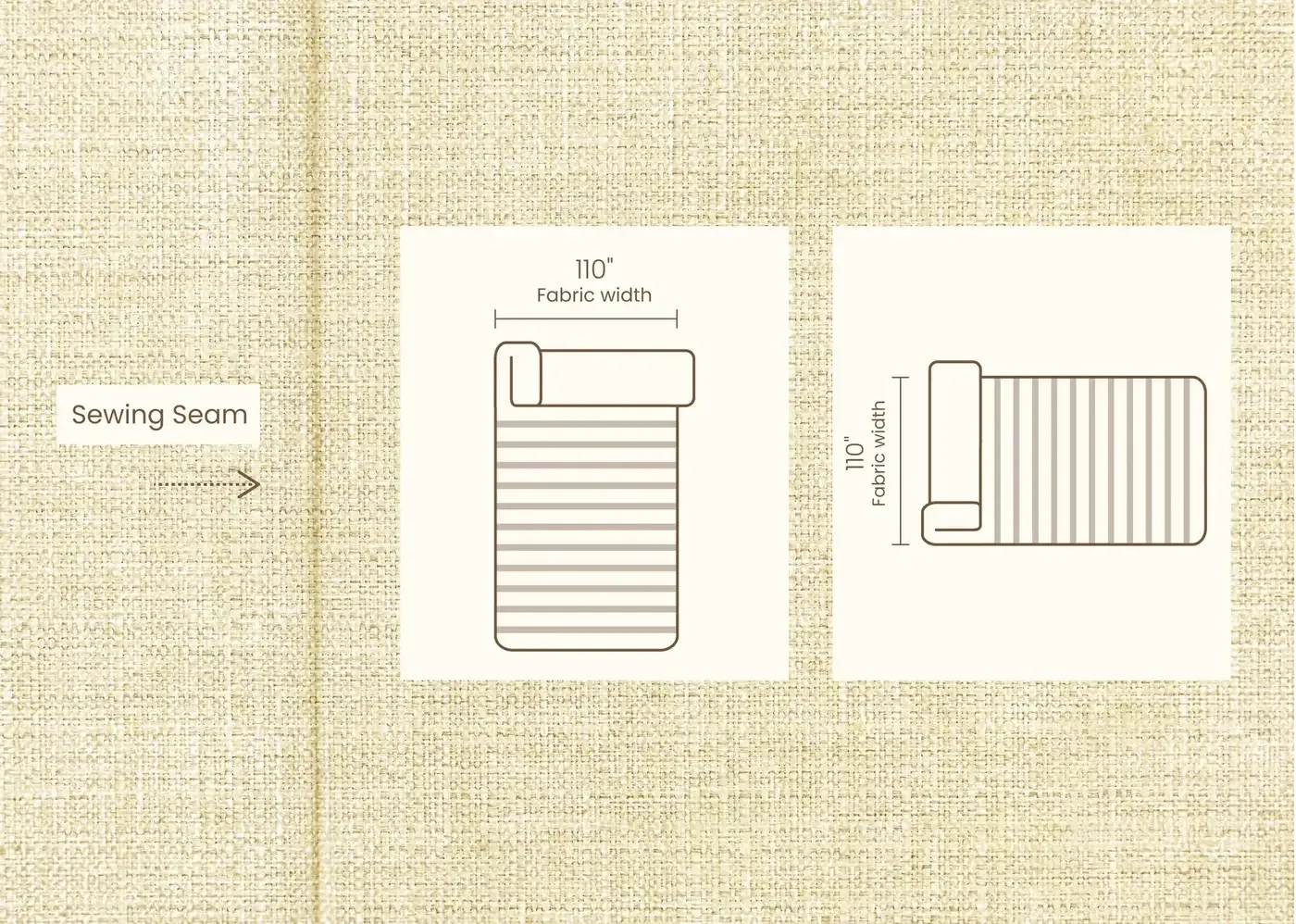
Curtain fabric width: The default width for curtain fabric (or bolt width) is typically 110 inches.
If the curtain's height exceeds 104 inches (Curtain width 110 inches minus hem rolling and cutting waste), the fabric will be rotated 90° during production, and the pattern direction will also change by 90°.
If both the width and height of the curtain exceed 104 inches, at least two fabric panels will need to be joined vertically. For aesthetic reasons, we will try to place the seams on the inward-facing side of the pleats.